Communication as
Rogue Unknowing
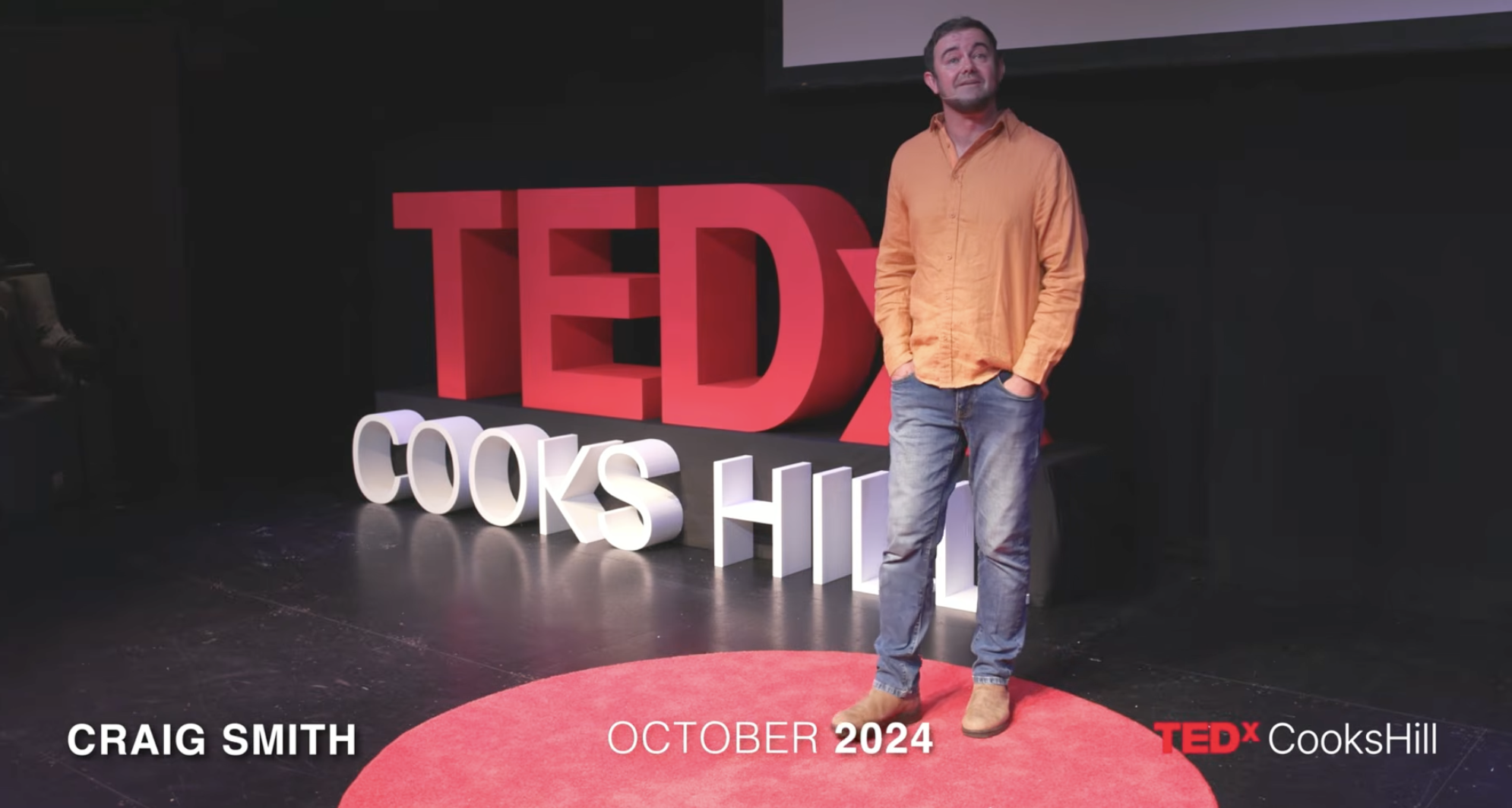
Craig Smith
Educator · TEDx Speaker · Author
“It ain’t what you don’t know that gets you into trouble. It’s what you know for sure.”
Often attributed to Mark Twain
Today’s path
- 01 Map your own atlas
- 02 Build bridges between ideas
- 03 Practise multiple perspectives
- 04 Care for the listener
- 05 Balance clarity and difficulty
- 06 Prepare without becoming rigid
- 07 Find your own form
“This is my way. What is yours?”
Friedrich Nietzsche
Create a map of your interests.
Pair share
Choose one part of your atlas.
Explain it to another person in a way that helps them care about it.
// Key idea
Your atlas determines
the bridges you can build.
Good communicators often create insight by connecting things that do not seem to belong together.
Build a meaningful bridge between two unrelated ideas.
Build a bridge — choose one pair
- What connects them?
- Why does the connection matter?
- How could it help someone understand something differently?
// Key idea
Insight is often a connection someone else has not made yet.
AI is not simple
AI touches:
Write down three perspectives on AI that you do not personally hold, but can understand.
- AI will democratise creativity
- AI will flatten culture
- AI will support accessibility
- AI will widen inequality
- AI will reduce cognitive effort
- AI will create new forms of expression
// Key idea
Good communication starts with noticing,
not speaking.
Communication is an act of care
Care sounds like:
- Are they with me?
- Am I going too fast?
- Did that term land?
- Have I assumed background knowledge?
- Am I giving enough structure?
- Am I respecting their intelligence?
// Accessibility is not simplification
Make ideas easier to enter without making them smaller.
What happens when care disappears?
Demonstration: a complex concept — too quickly, with jargon, no pauses, no framing.
Who did I lose?
Then again:
// Key idea
The best communicators are not the ones who say the most. They are the ones who notice the most.
Clarity is not enough
If communication is only simple, safe, and predictable, it can become stale.
Good communication also needs:
Melody and dissonance
- Clarity
- Repetition
- Structure
- Familiarity
- Difficulty
- Strangeness
- Tension
- New possibility
// Productive difficulty
If your audience understands everything immediately, you may not have taken them anywhere.
Choose one idea.
Explain it as clearly and accessibly as possible.
Explain it again, but add one productive difficulty:
- A metaphor
- A strange connection
- A philosophical question
- A challenging implication
- Choose a poem that is not immediately simple — one that does not give itself away on first reading
- Learn it by heart
- Recite it to somebody
- As you speak, think about how you are communicating the poem’s hidden intention — not just its words
- Tell all the truth but tell it slant — Emily Dickinson
- The Windhover — Gerard Manley Hopkins
- anyone lived in a pretty how town — e. e. cummings
- The Snow Man — Wallace Stevens
Preparing without reducing energy
I do not want to memorise scripts.
I want to learn how to move through ideas.
My process
- Think in motion
- Talk ideas through with AI
- Write rough sentences
- Say them aloud from memory
- Listen for rhythm
- Record the living version
- Transcribe it
- Replace the written version
- Build anchor points, not a full script
// Key idea
I was not trying to remember what I wrote. I was trying to remember what I meant.
- Write one idea in 2–3 sentences
- Put the writing away
- Say the idea aloud from memory
- Notice how it changes
- Rewrite the spoken version
I distrust perfect systems
Frameworks can help.
But no framework can perfectly hold a living idea.
// Form
The best talks teach the audience how to hear them.
Learning how to wobble
If you are not willing to risk being a bad communicator sometimes, you may never become a good one.
What are they expecting from you?
They are looking for someone real, thoughtful, and worth listening to.
In an age of AI
AI can generate something that sounds right.
But it cannot generate something that is you.
Final reflection
A good communicator asks:
- What do I care about?
- What perspectives can I hold?
- How can I help this audience understand?
- Where can I take a useful risk?
- What is true to my way of seeing?
This is my way.
What is yours?